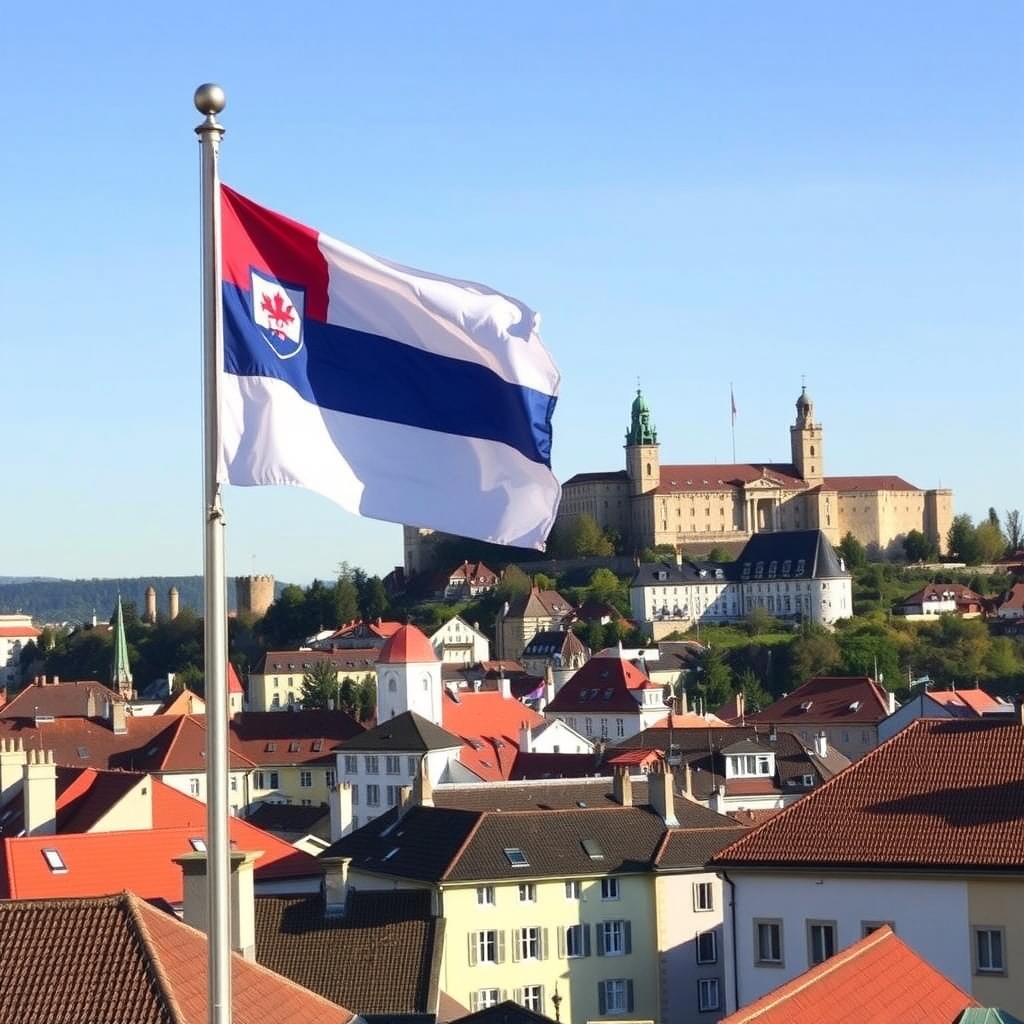
Slovenian independence took less than two years to achieve. In a referendum on 23 December 1990 an overwhelming majority voted for an independent state; on 25 June 1991 parliament adopted the Basic Constitutional Charter; and after the Ten-Day War and a three-month moratorium, the European Community recognised Slovenia on 15 January 1992. Here are the key steps, figures and people behind it.
Background: the end of the Cold War and the Slovenian Spring
Independence did not come out of nowhere. By the late 1980s the Cold War was winding down, communist regimes across Eastern Europe were collapsing, and Yugoslavia was shaken by economic crisis and growing disputes between its republics. In February 1987 Slovenia saw the publication of issue 57 of the journal Nova revija, often described as one of the intellectual foundations of the independence movement.
Then came the founding of the Committee for the Constitution (February 1989), the reading of the May Declaration on Ljubljana’s Congress Square (8 May 1989) and constitutional amendments that, in September 1989, ended the leading role of the League of Communists. In the first multi-party elections since the Second World War, held on 8 April 1990, the Demos coalition led by Dr Jože Pučnik won, while Milan Kučan was elected President of the Presidency of the republic.
The independence referendum of 23 December 1990
Demos put forward the idea of a referendum (in Slovenian, plebiscit) in November 1990, and on 6 December parliament passed the Plebiscite Act with 203 votes in favour and none against. The Yugoslav Federal Presidency declared the vote unconstitutional, but it went ahead at around 4,250 polling stations. The Speaker of the Assembly, Dr France Bučar, officially announced the results on 26 December.
| Figure | Result |
|---|---|
| Turnout | 93.2% of eligible voters |
| Votes in favour | 1,289,369 (95% of those voting, 88.5% of all voters) |
| Votes against | 57,877 (4%) |
| Invalid ballots | 12,412 (0.9%) |
That evening, at Cankarjev dom in Ljubljana, Pučnik spoke the words that became the symbol of the vote: “Yugoslavia is no more. Now it is about Slovenia.” The Slovenian government’s anniversary page on the referendum (in Slovenian) gives a detailed account.
The Basic Constitutional Charter on Independence
The referendum required parliament to pass all the necessary legislation within six months. It did so on 25 June 1991, adopting the Declaration of Independence and the Basic Constitutional Charter on the Sovereignty and Independence of the Republic of Slovenia. The Charter stated that federal Yugoslav law no longer applied in Slovenia and transferred the federation’s powers to the republic. The formal proclamation followed the next day, 26 June, on Republic Square in Ljubljana.
The Ten-Day War
The Yugoslav People’s Army (JNA) tried to take control of Slovenia’s border crossings as early as 26 June, and 27 June 1991 is regarded as the official start of the war. Slovenia’s Territorial Defence and police blocked armoured columns, built barricades and cut supply routes; in some places there was direct fighting.
- Duration: 27 June to 7 July 1991, with more than 70 larger and smaller clashes.
- Casualties: 19 killed and 182 wounded on the Slovenian side, 45 killed and 146 wounded in the JNA; 12 foreign nationals also died.
- Prisoners: Slovenian forces captured 4,693 JNA personnel and 252 members of the federal police.
- Key locations: Brnik airport, Trebnje, Vrhpolje, Divača and many border crossings.
From Brioni to international recognition
The war ended on 7 July 1991 with the Brioni Declaration, brokered by the European Community. Slovenia froze the implementation of its independence measures for three months and in return secured a ceasefire and the army’s withdrawal to its barracks.
- 8 October 1991: the moratorium expires; Slovenia introduces the tolar and its own customs service.
- 25–26 October 1991: the last JNA soldiers leave Slovenia through the port of Koper.
- 23 December 1991: parliament adopts the new Constitution of the Republic of Slovenia.
- 15 January 1992: the member states of the European Community recognise Slovenia (Germany had announced its recognition on 19 December 1991).
- 22 May 1992: Slovenia becomes a member of the United Nations.
Presidents of Slovenia since independence
The December 1991 constitution created the office of President of the Republic, elected directly for a five-year term. The office has been held by:
- Milan Kučan (1992–2002), previously President of the Presidency during the independence process;
- Janez Drnovšek (2002–2007), previously long-serving prime minister;
- Danilo Türk (2007–2012);
- Borut Pahor (2012–2022);
- Nataša Pirc Musar (since December 2022), the country’s first female president.
How Slovenia remembers independence today
Three dates mark independence: 25 June is Statehood Day, 26 December is Independence and Unity Day (the anniversary of the referendum results), and 25 October is Sovereignty Day, commemorating the departure of the last JNA soldier. Travellers interested in this period can visit Republic Square in Ljubljana, the memorial to the fallen at Žale cemetery, and the border crossings and battle sites where memorials stand today.
Frequently asked questions
When did Slovenia become independent?
Parliament declared independence on 25 June 1991, with the formal proclamation on 26 June. Recognition by the European Community followed on 15 January 1992.
How many people voted for independence in the referendum?
1,289,369 people voted for an independent Slovenia, which was 95% of those voting or 88.5% of all eligible voters, with turnout of 93.2%.
What is the Basic Constitutional Charter?
The Basic Constitutional Charter on the Sovereignty and Independence of the Republic of Slovenia, adopted on 25 June 1991, is the legal act by which Slovenia took over the powers of the Yugoslav federation and became an independent state.
How long did the war in Slovenia last?
The Ten-Day War lasted from 27 June to 7 July 1991, when the Brioni Declaration was signed. 19 people were killed on the Slovenian side.
Who was the first president of independent Slovenia?
Milan Kučan was the first President of the Republic, serving from 1992 to 2002; during the independence process he was President of the Presidency.