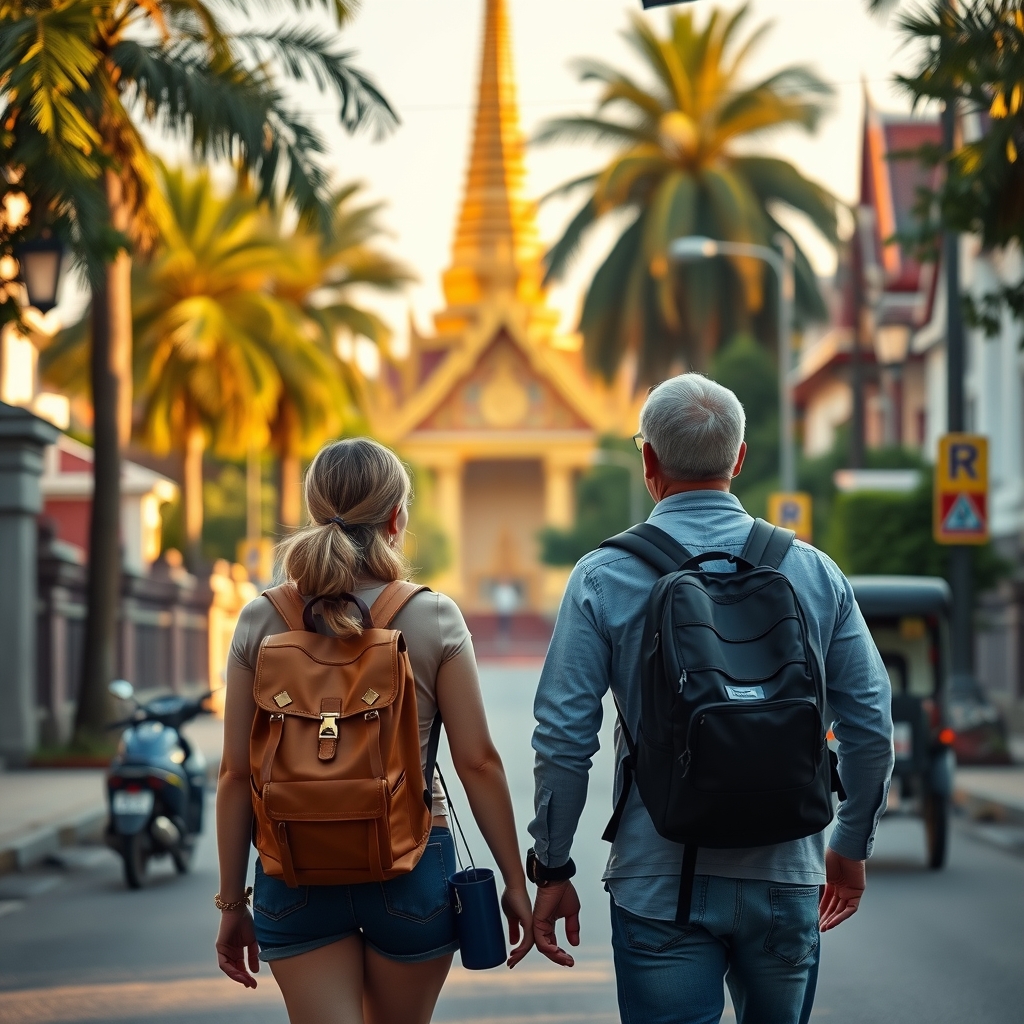
EU citizens travelling to Thailand do not need a visa for stays of up to 30 days, but they do need a passport valid for at least six more months and a Thailand Digital Arrival Card (TDAC) submitted before arrival. The most pleasant weather runs from November to February, when most of the country is dry and temperatures are bearable.
Entry requirements for EU citizens
For years Thailand allowed visa-free stays of up to 60 days, but in spring 2026 it announced tighter rules. According to the Czech Ministry of Foreign Affairs, since 15 September 2026 EU citizens can stay up to 30 days without a visa. The immigration officer decides the actual length of stay on arrival, and it can be extended at an immigration office by up to 30 days. Travellers with other passports, including UK, US or Balkan non-EU passports, should check the rules for their nationality separately.
- Passport: must be valid for more than six months on entry. Thai law requires you to carry it at all times.
- TDAC (Thailand Digital Arrival Card): mandatory since 1 May 2025 for everyone arriving by air, sea or land. Fill it in no earlier than three days before arrival; it is free.
- Proof of funds: on request you must show 20,000 baht per person or 40,000 per family in cash, or the equivalent in another major currency.
- Onward or return ticket: not a general requirement, but officers may ask for it, so keep it handy.
If you plan a longer stay, arrange a tourist visa before you leave. Before travelling, also read the latest Thailand travel advice from the Slovenian Ministry of Foreign Affairs or your own government’s equivalent.
When to travel to Thailand
Thailand has three distinct seasons, and its two coastlines get their rain in different months, which matters when choosing islands.

| Season | Months | What to expect |
|---|---|---|
| Cool and dry | November–February | Most pleasant weather, calm seas, the biggest crowds and higher prices. |
| Hot | March–May | April is the hottest month, above 40 °C in the north; in March, field burning can worsen air quality up north. |
| Rainy | June–October | Short, heavy downpours, lush scenery, lower prices; September is among the wettest months. |
The Andaman coast (Phuket, Krabi, Koh Lanta) is at its best from November to March; in summer the sea is rougher and ferries may be cancelled. The Gulf islands (Koh Samui, Koh Phangan, Koh Tao) are often dry in summer and wettest from October to December. If your holiday falls in July or August, the Gulf is the better bet.
Where to go: sample itineraries
One week
Bangkok with its temples and markets, a day trip to the former capital Ayutthaya, then two or three days on one island.
Two weeks
Bangkok, then a night train or short flight north to Chiang Mai and Chiang Rai, finishing with a few days on the beach. The flight from Bangkok to Chiang Mai takes about an hour.
Three weeks or more
Add Khao Sok National Park, with its lake framed by limestone cliffs, and some of the quieter islands.
Getting around is easy by train (Bangkok to Chiang Mai, Ayutthaya, Surat Thani and Hua Hin), cheap intercity buses and domestic flights. In Bangkok, insist on the meter in taxis or use the Grab app. Ferries and speedboats link the islands; in high season, book a day ahead.
How much does a trip to Thailand cost?
There are no direct flights from Slovenia or most of Central Europe, so you will change planes at a major European or Middle Eastern hub. Book early and keep your dates flexible for the cheapest fares, especially outside the Christmas and New Year peak. On the ground, costs are moderate; the figures below are rough guides per person:
- street food: about €2–6 per meal, a good restaurant €8–15;
- hostel or guesthouse: about €10–15 a night, a decent three-star hotel often under €45;
- overall mid-range daily budget: about €70–100 including accommodation, food, transport and entry fees.
The currency is the Thai baht. ATMs usually charge foreign cards a flat fee of around 220 baht (roughly €6) per withdrawal, so take out larger sums less often. Markets, stalls and small eateries usually want cash.
Safety, laws and health
Thailand is a country where increased caution is advised. A few rules visitors most often overlook:

- E-cigarettes are illegal – both importing and using them; penalties range from heavy fines to prison. Smoking on beaches is banned.
- Drugs: penalties for possession and dealing are extremely severe.
- Monarchy: criticising the royal family is a criminal offence, and the law is interpreted very broadly.
- Border areas: all travel is advised against to the provinces bordering Cambodia (including Surin, Buriram, Sa Kaeo, Chanthaburi and Trat), and non-essential travel to the southern provinces of Narathiwat, Yala, Pattani and Songkhla.
- Scooters: you need an international driving permit and a helmet; rental scooters in resorts are often unregistered.
- Never leave your passport as a deposit when renting a scooter or jet ski.
No vaccinations are mandatory, but ask a travel clinic which ones are recommended. Dengue cases rise in the rainy season, so protect yourself from mosquito bites. Tap water is not for drinking. Do not travel without solid health insurance that covers repatriation, as hospital care can quickly cost several hundred euros a day.
Etiquette in temples and with locals
Thais are welcoming but value respect. In temples, cover your shoulders and knees and take off your shoes. Never touch anyone’s head, even a child’s, do not point your feet at people or Buddha statues, and do not turn your back on a statue to take a selfie. The greeting is the wai: palms pressed together with a slight bow.
Thailand is often the first long-haul trip for people who later look at other destinations from top 10 travel lists, such as Japan, China, Oman, Uzbekistan, Zanzibar or Mauritius. It suits a first trip to Asia well: tourist infrastructure is well developed, prices are moderate and you can easily plan the route yourself.
Frequently asked questions
Do EU citizens need a visa for Thailand?
Not for tourist stays of up to 30 days. To stay longer, extend your stay at an immigration office or get a tourist visa before you go.
What is the TDAC?
The Thailand Digital Arrival Card, which every foreign visitor completes online no earlier than three days before arrival. It is free.
What is the best time to visit Thailand?
November to February. In summer, the Gulf islands such as Koh Samui are the better choice.
How much money do I need per day?
About €70–100 per person for a mid-range trip, and considerably less with street food and hostels.