Slovenian traditions follow the rhythm of the year: in winter masked figures chase the cold away, in spring villages welcome the new greenery, in summer bonfires burn on the hills, in autumn the new wine is christened and in December children wait for three gift-bringers. Many of these customs have pre-Christian roots that blended with the church calendar, and they are still very much alive in towns and villages.
What counts as a folk custom
Slovenian ethnologists usually speak of šege in navade, customs and practices: established actions of a community that repeat at a certain time or occasion and carry a meaning, from carnival rounds to wedding invitations. Folk customs are not museum pieces. Some have died out, while others have been revived by tourist and folklore associations.
Slovenia’s Ministry of Culture keeps a Register of Intangible Cultural Heritage with 135 entries and more than 400 bearers. The largest group is economic knowledge and skills (53), followed by customs and practices (40). Slovenian elements on UNESCO’s Representative List include the rounds of kurenti, bobbin lace-making, beekeeping and dry-stone walling.
The easiest way to understand Slovenian customs is to follow them through the seasons. Below is an overview of the best-known ones, with dates, places and the meaning behind them.
Winter and carnival: masks that drive away the winter
In some places carnival time begins as early as December; elsewhere it runs from Candlemas (2 February), when candles are blessed in churches, until Ash Wednesday. Carnival (pust) is one of the most varied Slovenian customs: the national register lists 15 carnival-related entries.
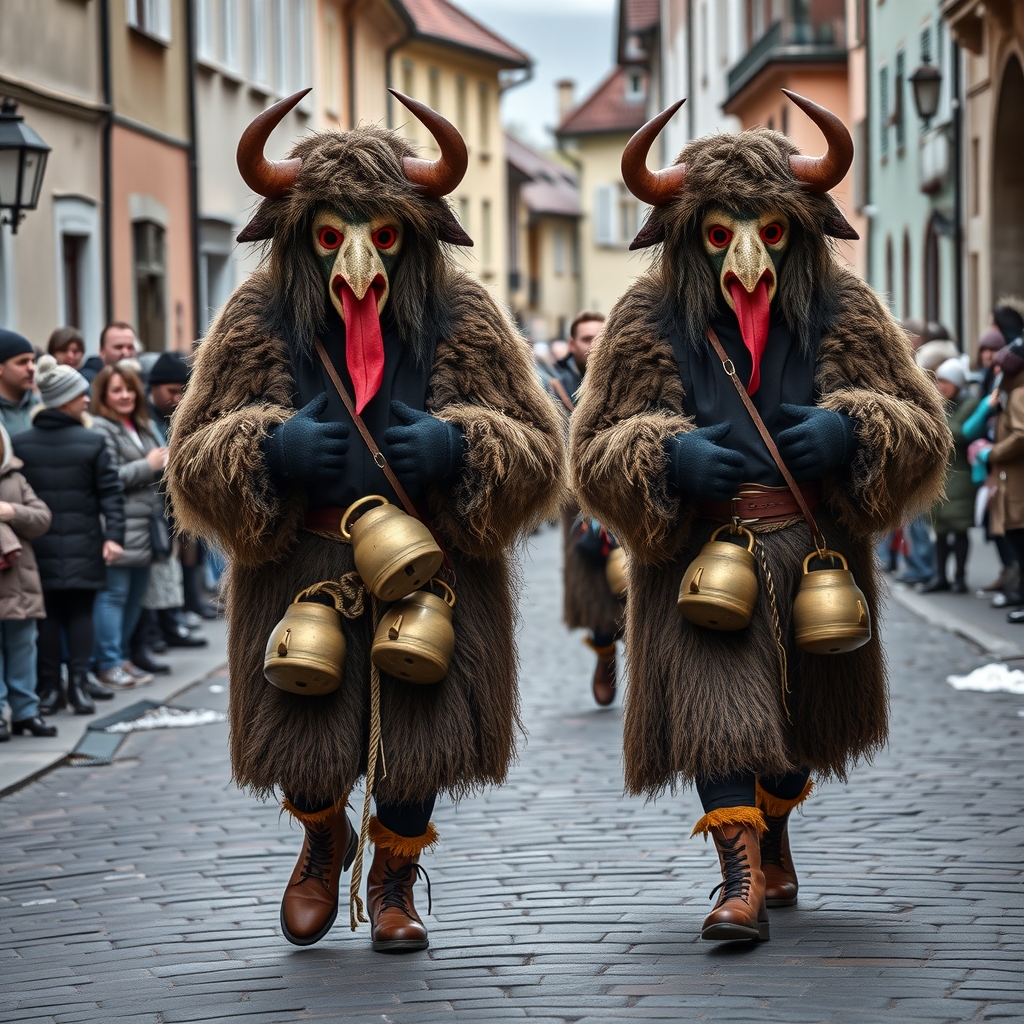
The most widespread traditional carnival figure is the kurent from the Ptuj area, the Drava Plain, Haloze and the Slovenske gorice hills. According to folk belief, he drives away evil and brings happiness and prosperity. The door-to-door rounds of kurenti were added to the UNESCO list on 7 December 2017.
| Carnival figure | Area | What makes it special |
|---|---|---|
| Kurenti | Ptuj, Drava Plain, Haloze, Slovenske gorice | door-to-door rounds, UNESCO list |
| Laufarji | Cerkno | carved wooden masks |
| Škoromati | southern edge of Brkini, Podgrajsko-Matarsko podolje | collect gifts, bury or burn the carnival figure on Ash Wednesday |
| Ta lepi and ta grdi (the beautiful and the ugly) | Drežnica and nearby villages | the ugly ones chase young people and dust them with ash, the beautiful ones visit homes and dance |
| Borovo gostüvanje | Prekmurje | symbolic wedding with a pine tree |
| Šelmarji | Kostanjevica na Krki | metal head called Šelma |
Where no girl had married during the previous year, villagers in parts of Gorenjska, Štajerska and Koroška would drag a log, a symbolic wedding called ploharija that survives to this day. Carnival ends on Ash Wednesday, when in some places the carnival figure is buried or burned, symbolically sending winter away.
Spring: from St Gregory’s Day to Green George
St Gregory’s Day (12 March) was once considered the first day of spring. The custom of floating lights on water has almost disappeared, but in Tržič children still make small houses and boats and set them loose on the river.
Easter
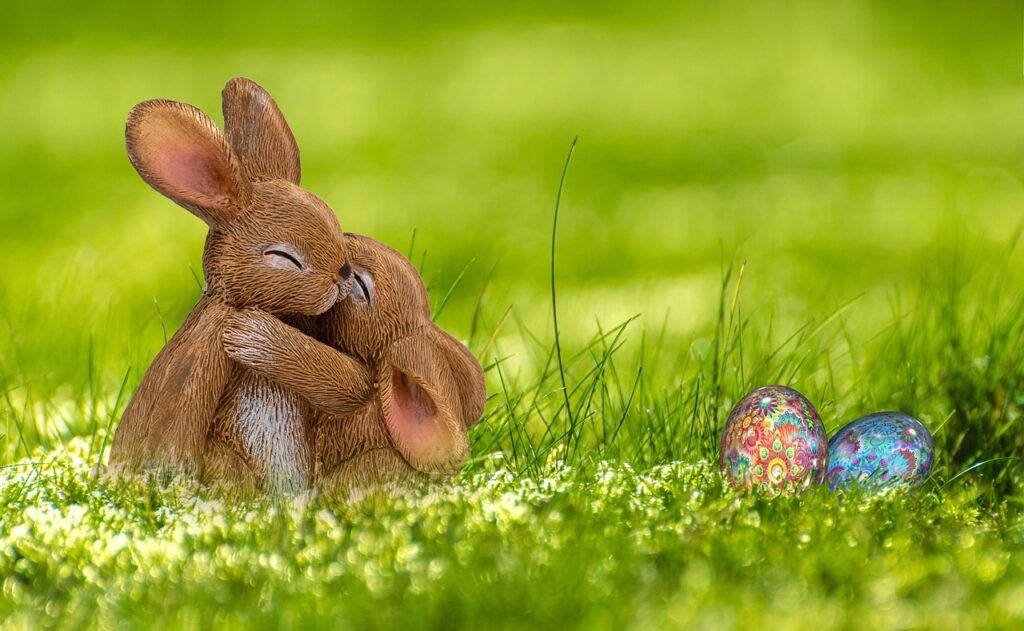
Easter in Slovenia is full of symbols of new life. On Palm Sunday people bring butare, decorated bundles of greenery, to church to be blessed, and on Holy Saturday they have the festive food blessed, which must include ham, coloured eggs and potica. The Easter eggs of Bela krajina, called pisanice, are decorated with a batik technique: wax is applied with a tool called a pisač, and the patterns of crosses, stars, circles and triangles are mostly white, red and black. They are still made mainly in Adlešiči and the surrounding villages.
On Easter Monday the old town of Metlika hosts the ritual dance zaviranje kola. Dancers form a closed chain led by a leader and move slowly without any instruments; the rhythm comes only from their steps and traditional songs.
St George’s Day
At the end of April, on St George’s Day, Bela krajina welcomes Green George (Zeleni Jurij), a mythical shepherd dressed in birch branches who symbolically brings spring. In Črnomelj the juraši dress him in greenery and lead him to the old town, where the leaves are stripped off and thrown into the Dobličica river. This represents a return to the underworld and ensures that George will come back next year. The Jurjevanje festival in Črnomelj, named after him, has been held since 1964 and is regarded as Slovenia’s oldest folklore festival.
Summer: Midsummer Night bonfires
Midsummer Night (kresna noč) is the night of 23 to 24 June, close to the summer solstice. It goes by several names in Slovenian, including kres, kresni večer, ivanje and šentjanževo. People lit large bonfires on hilltops, which were believed to help the sun keep its strength.
On this night plants were thought to have special powers, especially around midnight and before dawn when the dew falls. Folk tradition mentions ferns, daisies and St John’s wort, but fern seed was considered the strongest: whoever carried it in a pocket could supposedly talk to animals or become invisible. Slovenian mythology also links this night to Kresnik, a solar hero who fights the Snake Queen.
Today Midsummer bonfires are mostly organised by villages and local associations. If you light one yourself, keep a few rules in mind:
- build the fire in an open space, well away from forests, buildings and dry grass;
- open fires are not allowed when a high fire risk has been officially declared in Slovenia;
- an adult should watch the fire at all times, with water close at hand;
- put the fire out completely before leaving.
Autumn and Advent: St Martin, St Nicholas and Christmas
St Martin’s Day, 11 November, is the day when grape must turns into wine. Wine cellars and local societies mark it by “christening” the must, and the table often features roast goose with mlinci (flatbread pasta) and red cabbage.
In Slovenia December is known as the month of three good men. First comes St Nicholas (Miklavž), who brings children presents on the eve of his feast, 5 December, in some places accompanied by devil-like parklji. He is followed by Santa Claus (Božiček) and Grandfather Frost (dedek Mraz). Families set up nativity scenes and Christmas trees, hang wreaths on doors and place Advent wreaths on tables.
Christmas is unthinkable without potica, a rolled walnut cake. In the past every family member, and even the livestock, received a piece, as it was believed to bring luck, health and protection from evil spirits, lightning and thieves. In Štajerska people baked a ritual fruit bread called kuc or krhljak, while in Bela krajina, Dolenjska and Notranjska the Christmas bread was decorated with nativity figures and animals made of dough. Around New Year and on Epiphany young men went carol singing (koledovanje) to bring good luck to every house.
Where to experience Slovenian customs today
Many customs are still part of local community life, so the best way to experience them is on the spot:
- Kurentovanje in Ptuj during carnival, with rounds of kurenti and other masks;
- Laufarija in Cerkno, with wooden masks and a mock carnival trial;
- Jurjevanje in Črnomelj, with Green George and Bela krajina folk dances;
- Easter egg workshops in Bela krajina and the collection at the Bela Krajina Museum in Metlika;
- St Martin’s celebrations in wine regions from Štajerska to Primorska.
A detailed overview of carnival figures by region (in Slovenian) is published by the Slovenian Ministry of Culture. When planning a visit, check the dates with the local tourist office, as event schedules change from year to year.
Frequently asked questions
What are the best-known Slovenian traditions?
The best known include the carnival rounds of kurenti, laufarji and škoromati, Easter eggs and butare bundles, St George’s Day with Green George, Midsummer Night bonfires, St Martin’s Day with the christening of the new wine and the visit of St Nicholas on 5 December.
Which Slovenian customs are on the UNESCO list?
Slovenian elements on UNESCO’s Representative List of the Intangible Cultural Heritage of Humanity include the door-to-door rounds of kurenti (since 2017), bobbin lace-making, beekeeping and dry-stone walling.
When is Midsummer Night in Slovenia?
Midsummer Night is the night of 23 to 24 June, around the feast of St John the Baptist and close to the summer solstice. In Slovenian it is called kres, kresni večer, ivanje or šentjanževo.
Who is Green George?
Green George (Zeleni Jurij) is a mythical shepherd dressed in birch branches who symbolically brings spring on St George’s Day in Bela krajina. The custom has pre-Christian Slavic roots and gives its name to the Jurjevanje festival in Črnomelj.
What is a kurent?
The kurent is the most widespread traditional carnival figure in Slovenia, found around Ptuj, the Drava Plain, Haloze and Slovenske gorice. Folk belief holds that he drives away evil and brings happiness and prosperity.