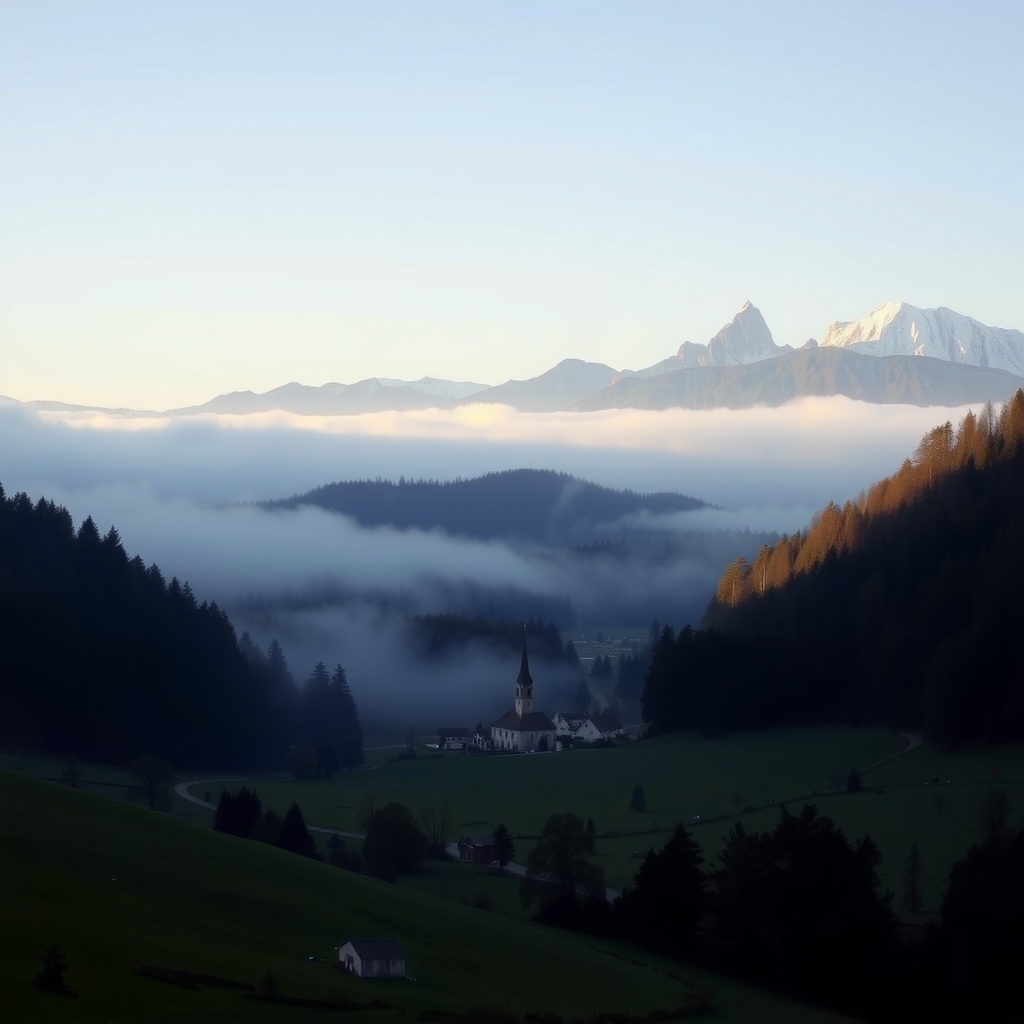
The climate of Slovenia is remarkably varied for such a small country: on the coast the average annual temperature tops 12 °C, while on the highest peaks of the Julian Alps it stays below 0 °C. The reason is Slovenia’s position where the Alps, the Dinaric mountains, the Pannonian Plain and the Adriatic Sea meet, so three climate types follow one another within a few dozen kilometres.
Three climate types in a small space
Geographers and the Slovenian Environment Agency (ARSO) divide the country’s climate into three main types. The boundaries are not sharp, because relief and altitude shape the weather so strongly.
- Sub-Mediterranean climate – west of the Alpine-Dinaric barrier: the coast, the Karst, the Vipava Valley, Goriška Brda and the lower Soča Valley.
- Moderate continental climate – central and eastern Slovenia, with a sub-Alpine variant in the centre and a more pronounced continental one in the far east.
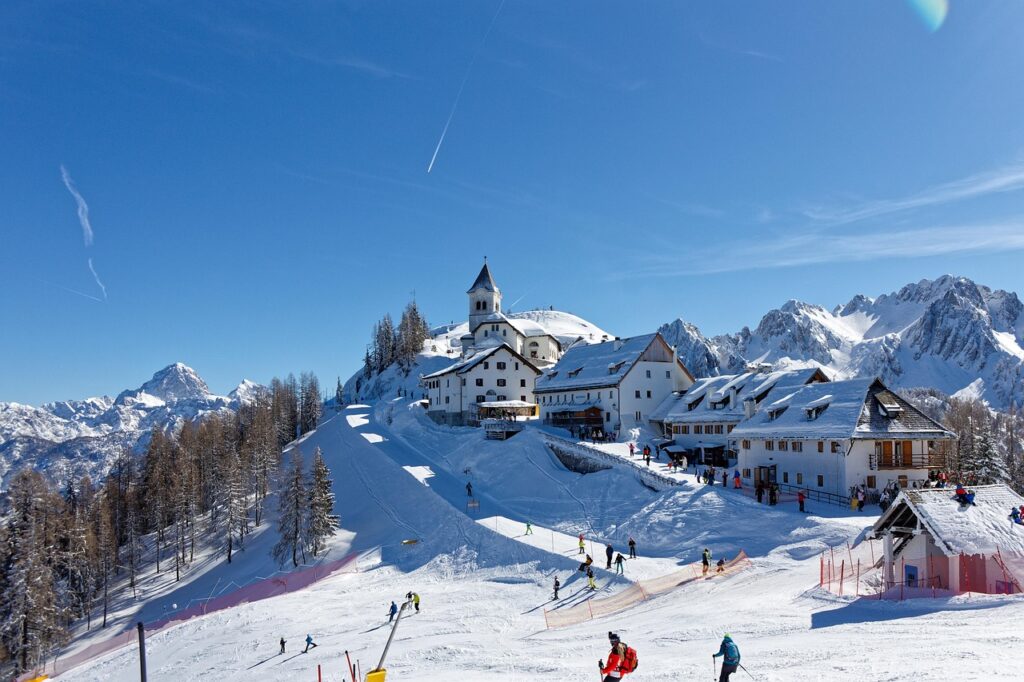
- Alpine (mountain) climate – the Julian Alps, the Kamnik-Savinja Alps and the Karawanks.
Sub-Mediterranean climate
Western Slovenia has hot, dry summers and mild winters in which snow on the coast is the exception rather than the rule. Most precipitation falls in autumn. The sea softens temperature extremes, which is why this part of the country has warmed more slowly than the interior in recent decades.
Moderate continental climate
In central and eastern Slovenia the contrast between summer and winter is greater. Summers are warm, thunderstorms with hail are common, and winters are cold and often foggy in the basins. Precipitation decreases towards the east, in Prekmurje.
Alpine climate
In the mountains winters are long and snowy, summers short and fresh. Temperature drops quickly with altitude, by 5.3 °C per 1,000 metres on average according to ARSO. The warmest month in the mountains is often August and the coldest February, whereas in the lowlands July is warmest and January coldest.
Temperatures from the sea to Triglav
Average annual temperatures show just how varied Slovenia’s climate is. The table summarises values from ARSO’s analysis of the 1971–2000 period.
| Area | Average annual temperature |
|---|---|
| Coast, Vipava Valley, Goriška Brda | above 12 °C |
| Rest of Primorska and the eastern lowlands | 10–12 °C |
| Lower parts of central Slovenia | 8–10 °C |
| Highest Alpine peaks | below 0 °C |
The extremes say even more. The long-standing national record of 40.8 °C was measured by ARSO on 8 August 2013 at Cerklje ob Krki airfield. The lowest officially recorded temperature, −34.5 °C, was measured in Babno Polje, known as the coldest place in the country.
Rain, snow and fog
Slovenia is a fairly wet country. Westerly winds bring moist air from the Adriatic, which rises over the first high mountains and drops its rain. That is why the Julian Alps, with more than 3,200 mm a year, are among the wettest areas in the Alps and in Europe, while Prekmurje receives less than 900 mm. The coast gets 1,100 to 1,200 mm a year. The record annual total, 4,605 mm, was measured in Breginj in 1960.
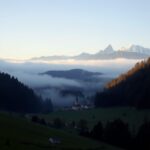
In the high mountains snow cover lasts more than 200 days a season on average, in the central lowlands 20 to 60 days. In April 2001 the snow on Kredarica, below Triglav, was 7 metres deep. In winter the basins, especially around Ljubljana, are prone to temperature inversions: cold air is trapped near the ground and fog forms, while a few hundred metres higher the sun is shining.
Bora, foehn and sunny days
Slovenia’s best-known wind is the bora (burja). This gusty, dry and cold wind blows mainly over the Karst, the Vipava Valley and the coast, and its gusts can exceed 100 km/h. In Upper Carniola (Gorenjska) there is also the Karawanks foehn, a warm, dry northerly wind that on average blows less than once a year.
Sunshine varies too. Between 1971 and 2000 Bilje near Nova Gorica averaged 2,146 hours of sunshine a year, Ljubljana only 1,832, largely because of winter fog.
How Slovenia’s climate is changing
Warming in Slovenia is well documented. Already over 1971–2000 the average annual temperature rose by 1.7 °C in Ljubljana, 1.6 °C in Rateče, 1.5 °C in Murska Sobota and Novo mesto and 1.0 °C in Bilje. Ljubljana warmed most partly because the city grew, Bilje least because of the nearby sea. More detail is available in ARSO’s review of climate conditions in Slovenia (in Slovenian).
The effects are visible in everyday life: heatwaves are more frequent, lowland summers last longer and snow cover below 1,000 metres is increasingly unreliable. Heavy downpours that cause flooding are also becoming more common.
When to visit Slovenia based on the climate
- Spring (April–June) is ideal for the Karst, Brda and the Vipava Valley, when it is warm but not yet hot.
- Summer (July–August) is the time for mountains and the sea. Expect heat and afternoon storms in the lowlands, so set off for the mountains early in the morning.
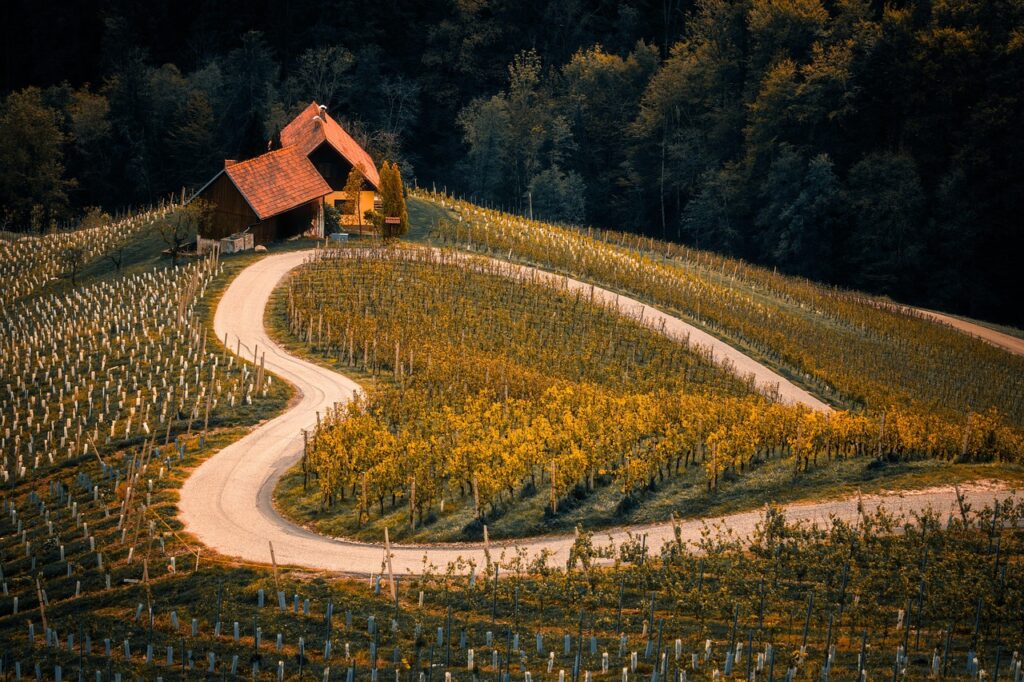
- Autumn (September–October) brings settled weather for hiking and the grape harvest, but also the heaviest rain in the west.
- Winter is most reliable for snow lovers in the Alps; the coast is mild, but can feel bitterly cold when the bora blows.
Frequently asked questions
What type of climate does Slovenia have?
Slovenia has no single climate. The west is sub-Mediterranean, the east moderate continental, the centre sub-Alpine and the high mountains Alpine.
Where does it rain the most in Slovenia?
The Julian Alps and the upper Soča Valley are the wettest, with more than 3,200 mm of precipitation a year. Breginj recorded 4,605 mm in 1960.
Where is the warmest part of Slovenia?
The coast, the Vipava Valley and the Goriška Brda hills are the warmest, with an average annual temperature above 12 °C.
Does it snow in Slovenia?
Yes. In the high mountains snow lies for more than 200 days a season on average, in the central lowlands for 20 to 60 days, while on the coast snow is rare.